Software engineering × XR research

Sina Masnadi

Senior Software Engineer · PhD in Computer Science

XR Research & Prototyping · Human Factors & UX Research

I build high-performance software, interactive simulations, and research tools for extended reality (XR). My work combines software engineering with experimental design and research into how people see and interact with augmented reality (AR) and virtual reality (VR).

At Magic Leap, I develop Unity applications, Python simulations, C++ software, and computer vision tools to explore XR technologies. My work supports research across teams, enables early concept evaluation, and informs hardware and product decisions.

I lead projects from research questions through prototype development and evaluation, combining user studies, statistical analysis, and engineering to turn findings into practical recommendations. My doctoral research at UCF focused on distance perception through head-mounted displays.

sina@masnadi.me


Experience

Senior Software Engineer

  • Develop software for XR research and prototyping using Unity/C#, Python, C++, JavaScript/Node.js, and MATLAB.
  • Develop high-performance C++ software for experimental display hardware, alongside simulation and perceptual evaluation tools.
  • Build XR simulation applications adopted across teams for early concept evaluation, research, and executive demonstrations.
  • Lead research projects spanning application development, experimental design, user studies, statistical analysis, and recommendations for hardware and product decisions.
  • Develop vision-informed calibration research tools, including an application whose data informed improvements to production segmented dimming on Magic Leap 2.
  • Create computer vision tools to characterize experimental hardware behavior, and define evaluation metrics for rendering quality, visual comfort, and performance tradeoffs.
Magic Leap 2 launch film
October 2022 – Present

Research Scientist

  • Developed Unity and Gazebo simulations for robotic interactions and synthetic training-data generation.
  • Developed object-detection and classification models using YOLO and Detectron.
  • Built robot-management dashboards and WebRTC-based remote-control tools.
  • Developed software for educational robots and designed and built autonomous and remotely operated inspection robots.
2021 – 2022

Research Assistant

  • Developed instrumented Unity research applications integrating eye tracking, custom shaders, and behavioral data collection.
  • Designed and conducted experiments on distance perception and field of view in VR and video see-through headsets, including stimulus development and statistical analysis.
  • Designed and implemented VRiAssist and AffordIt! end to end, combining XR software development with accessibility and interaction research.
  • Developed gaze-based depth-of-field effects, adaptive level-of-detail techniques, and selection and manipulation interactions.
  • Built human-in-the-loop tools for geometry reconstruction and robotic manipulation in collaboration with the University of Michigan.
  • Developed parallel CPU/GPU algorithms for convex-hull computation using CUDA; published this work at ISVC 2020.
  • Published XR and HCI research at ACM CHI, IEEE VR Workshops, and Graphics Interface.
August 2015 – August 2022

Full Stack Developer (Intern)

  • Developed web services and applications using Node.js, MongoDB, and AngularJS.
  • Led migration from traditional servers to AWS using Lambda, S3, and EC2.
  • Created consistent development environments using Docker.
  • Integrated Firebase services into the Android application for user-profile management.
June 2016 – August 2017

Senior Android Software Engineer

  • Developed Android application features, including an image-caching system and automated app installation and updates.
  • Designed and implemented client–server communication protocols and data structures.
  • Contributed to APK delta updates and defined and implemented analytics instrumentation.
  • Refined UI and interaction design through user studies, A/B testing, and usage analytics.
December 2012 – August 2015

Co-Founder & CTO

An Android application for paying and managing bills.

2013 – 2018

Creator

WallpaperHaa

An Android wallpaper application with more than 300,000 active users at its peak.

2013 – 2017

Skills

Software Engineering

Unity, Python, C++, C#, JavaScript, Node.js, MATLAB, Java, Android, CUDA, Git, AWS, Docker.

XR Research & Human Factors

AR/VR prototyping, human-computer interaction, experimental design, quantitative and qualitative user studies, statistical analysis, data visualization, eye tracking, visual perception, accessibility, foveated rendering, KPI definition.

AI & Agentic Development

Automated LLM pipelines, local inference with vLLM and Ollama, OpenRouter and Claude APIs, Claude Code, Codex, GitHub Copilot, Cursor.

Simulation & Analysis

Computer vision, PsychoPy, instrumented research applications, behavioral logging, Unity and Gazebo simulation, robotics, TensorFlow, PyTorch.


Publications & Research Demos

Effects of Field of View on Egocentric Distance Perception in Virtual Reality

Sina Masnadi, Kevin Pfeil, Jose-Valentin T Sera-Josef, Joseph LaViola
CHI Conference on Human Factors in Computing Systems (CHI 2022)
Investigated how headset field of view affects distance perception in virtual reality. Controlled user studies examined how visual coverage influences perceived distance, informing the design and evaluation of VR headsets.

Distance Perception with a Video See-Through Head-Mounted Display
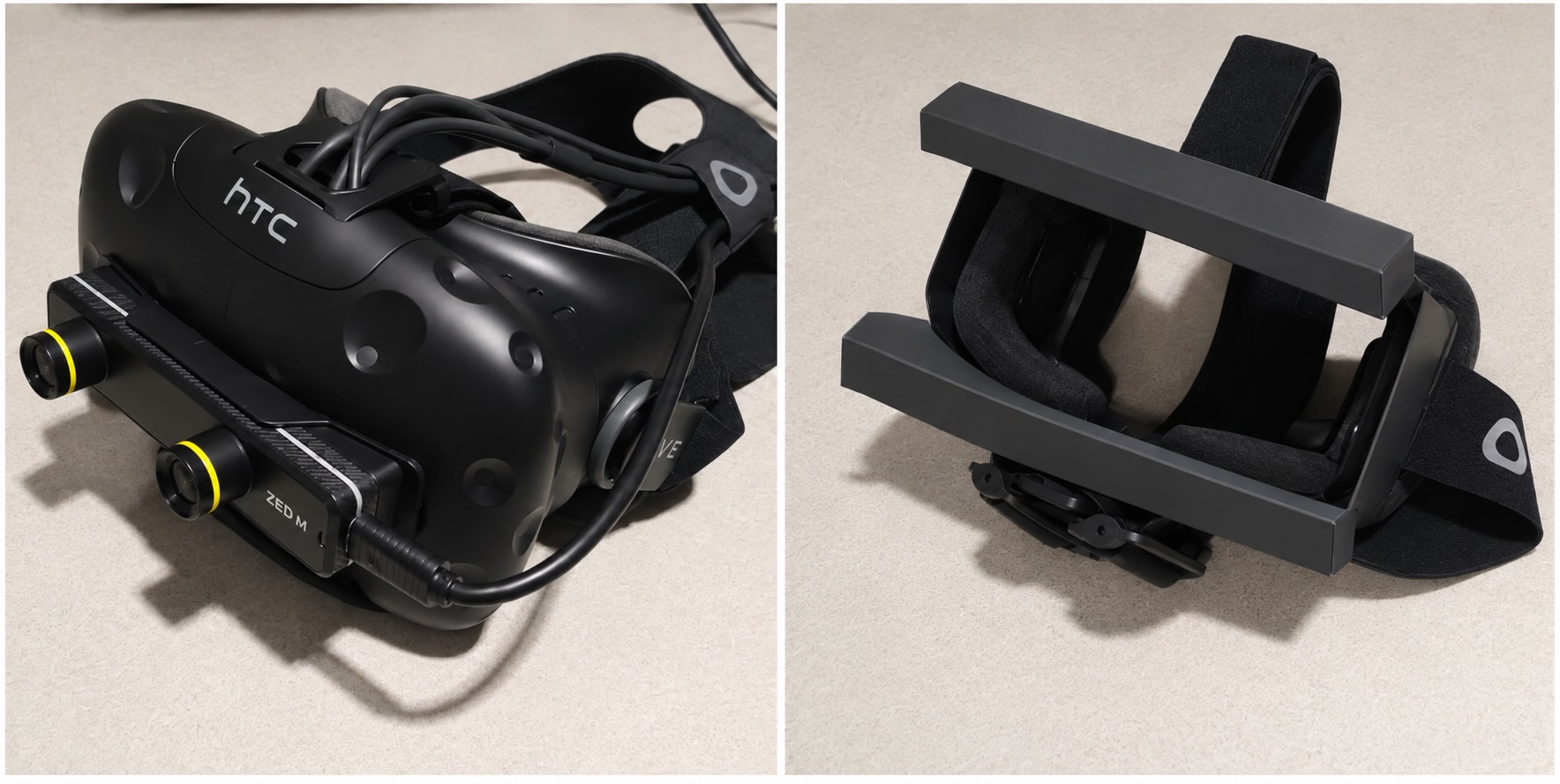
Kevin Pfeil, Sina Masnadi, Jacob Belga, Jose-Valentin T Sera-Josef, Joseph LaViola
Proceedings of the 2021 CHI Conference on Human Factors in Computing Systems (CHI 2021)
In recent years, pass-through cameras have resurfaced as inclusions for virtual reality (VR) hardware. With modern cameras that now have increased resolution and frame rate, Video See-Through (VST) Head-Mounted Displays (HMD) can be used to provide an Augmented Reality (AR) experience. However, because users see their surroundings through video capture and HMD lenses, there is question surrounding how people perceive their environment with these devices. We conducted a user study with 26 participants to help understand if distance perception is altered when viewing surroundings with a VST HMD. Although previous work shows that distance estimation in VR with an HTC Vive is comparable to that in the real world, our results show that the inclusion of a ZED Mini pass-through camera causes a significant difference between normal, unrestricted viewing and that through a VST HMD.

Field of View Effect on Distance Perception in Virtual Reality
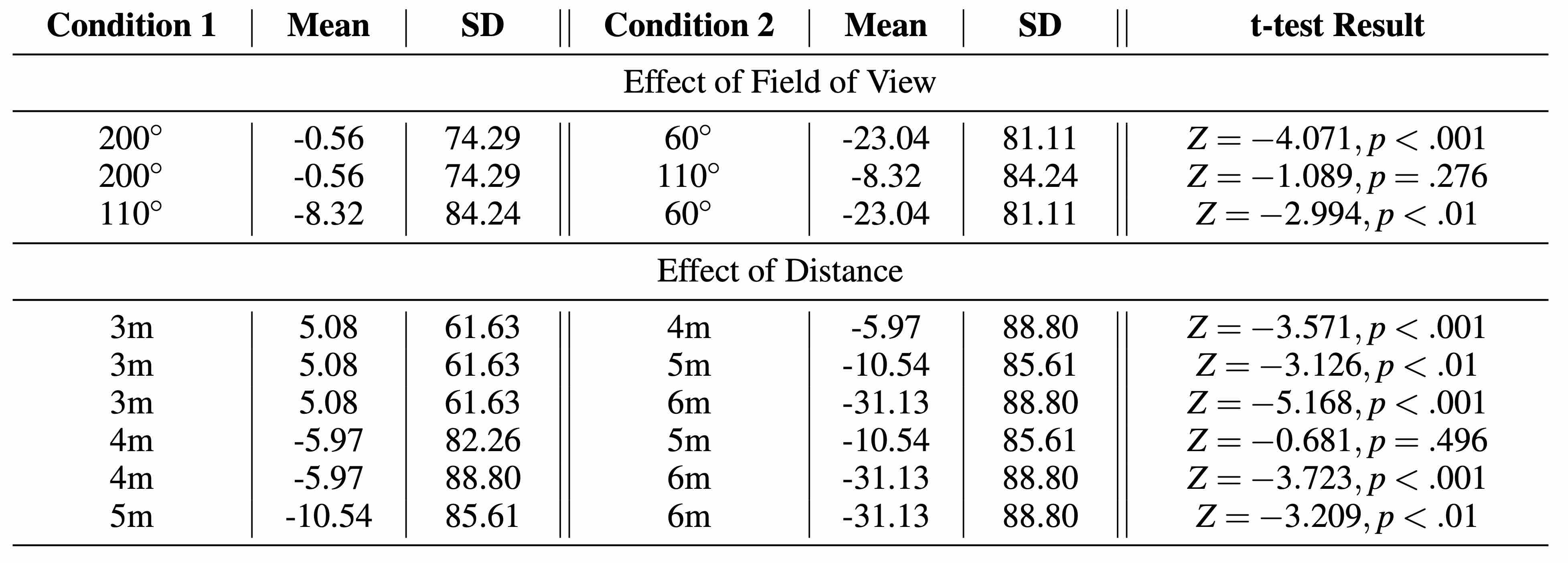
Sina Masnadi, Kevin P Pfeil, Jose-Valentin T Sera-Josef, Joseph J LaViola
2021 IEEE Conference on Virtual Reality and 3D User Interfaces Abstracts and Workshops (VRW)
Recent state-of-the-art Virtual Reality (VR) Head-Mounted Displays (HMD) provide wide Field of Views (FoV) which were not possible in the past. Due to this development, HMD FoVs are now approaching a level that parallels natural human eyesight. Previous efforts have shown that reduced FoVs affect user perception of distance in a given environment, but none have investigated VR HMDs with wide FoVs. Therefore, in this paper we directly investigate the effect of HMD FoV on distance estimation in virtual environments. We performed a user study with 14 participants who performed a blind throwing task wearing a Pimax 5K Plus HMD, in which we virtually restricted the FoV to 200°, 110°, and 60°. We found a significant difference in perceived distance between the 200° and 60° FoVs, as well as between the 110° and 60° FoVs. However, no significant difference was observed between 200° and 110°. Our results indicate that users tend to underestimate distance with the narrower FoV

ConcurrentHull: A Fast Parallel Computing Approach to the Convex Hull Problem

Sina Masnadi and Joseph J. LaViola Jr.
International Symposium on Visual Computing (ISVC 2020)
The convex hull problem has practical applications in mesh generation, file searching, cluster analysis, collision detection, image processing, statistics, etc. In this paper, we present a novel pruning-based approach for finding the convex hull set for 2D and 3D datasets using parallel algorithms. This approach, which is a combination of pruning, divide and conquer, and parallel computing, is flexible to be employed in a distributed computing environment. We propose the algorithm for both CPU and GPU (CUDA) computation models. The results show that ConcurrentHull has a performance gain as the input data size increases. Providing an independently dividable approach, our algorithm has the benefit of handling huge datasets as opposed to other approaches presented in this paper which failed to manage the same datasets.

Sketching affordances for human-in-the-loop robotic manipulation tasks
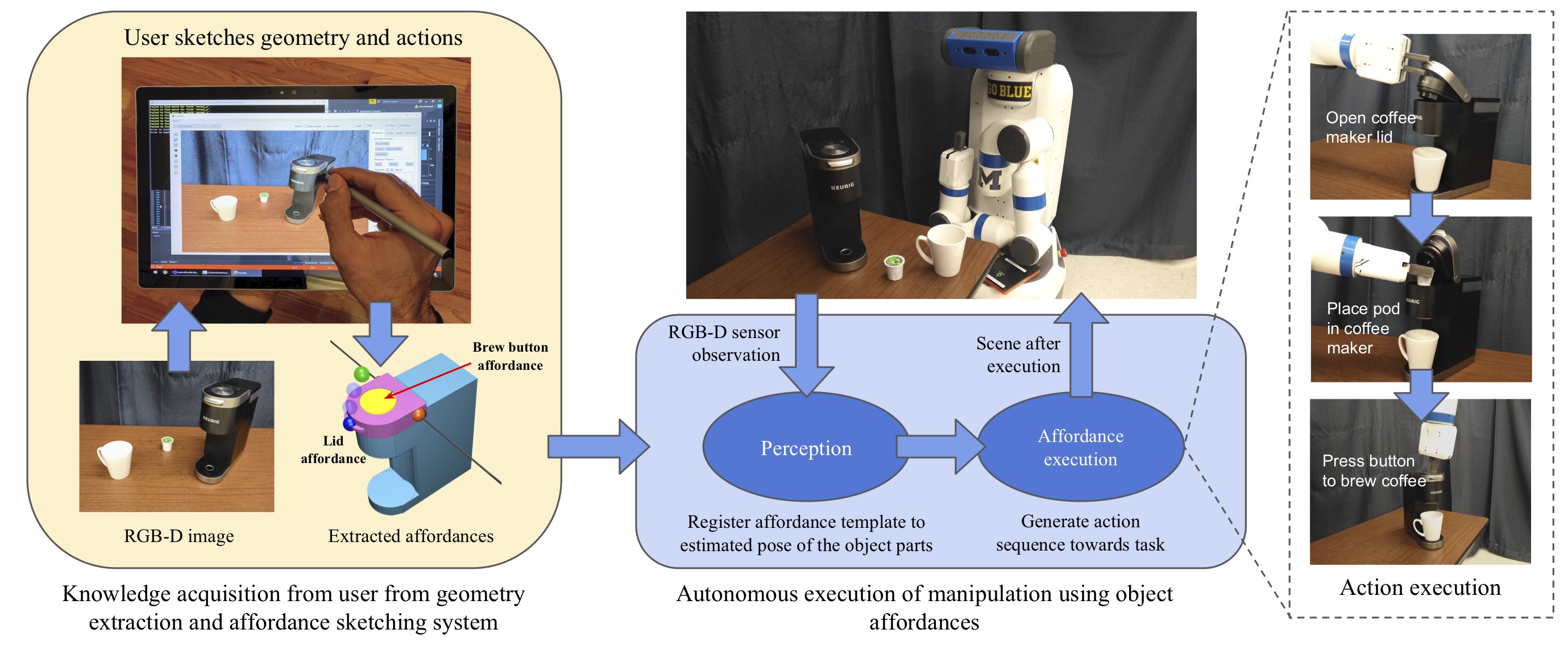
Sina Masnadi, Joseph J LaViola, Jana Pavlasek, Xiaofan Zhu, Karthik Desingh, O Jenkins
ICRA, 2nd Robot Teammates Operating in Dynamic, Unstructured Environments (RT-DUNE)
We propose to enable a human user, without expert knowledge about robotics and programming, to transfer knowledge about affordances in a given scene to a robot. To this end, we propose an easy-to-use system to acquire object geometries and their associated affordances through sketching on a graphical interface. This allows users to interact with robotic systems by utilizing sketch-based techniques to provide a straightforward user interface, as shown in Figure 2. The user sketches the geometry of the object and its affordances. During task execution, when the robot encounters the objects for which it has affordance information, it can execute the affordances by registering the object geometries to its RGB-D data and then performing actions sequentially to achieve the goal.

VRiAssist: An Eye-Tracked Virtual Reality Low Vision Assistance Tool

Sina Masnadi, Brian Williamson, Andrés N Vargas González, Joseph J LaViola
IEEE VR, 2020 IEEE Conference on Virtual Reality and 3D User Interfaces Abstracts and Workshops (VRW)
We present VRiAssist, an eye-tracking-based visual assistance tool designed to help people with visual impairments interact with virtual reality environments. VRiAssist’s visual enhancements dynamically follow a user’s gaze to project corrections on the affected area of the user’s eyes. VRiAssist provides a distortion correction tool to revert the distortions created by bumps on the retina, a color/brightness correction tool that improves contrast and color perception, and an adjustable magnification tool. The results of a small 5 person user study indicate that VRiAssist helped users see better in the virtual environment depending on their level of visual impairment.

AffordIt!: A Tool for Authoring Object Component Behavior in Virtual Reality

Sina Masnadi, Andrés N. Vargas González, Brian Williamson, Joseph J. LaViola Jr.
Graphics Interface 2020

A VR authoring tool that lets users select parts of 3D objects, assign behaviors, and preview the resulting interactions. Designed and implemented end to end, with usability evaluation.

Paper


AffordIt!: A Tool for Authoring Object Component Behavior in VR

Sina Masnadi, Andrés N Vargas González, Brian Williamson, Joseph J LaViola
IEEE VR, 2020 IEEE Conference on Virtual Reality and 3D User Interfaces Abstracts and Workshops (VRW)
This paper presents AffordIt!, a tool for adding affordances to the component parts of a virtual object. Following 3D scene reconstruction and segmentation procedures, domain experts find themselves with complete virtual objects, but no intrinsic behaviors have been assigned, forcing them to use unfamiliar Desktop-based 3D editing tools. Our solution allows a user to select a region of interest for a mesh cutter tool, assign an intrinsic behavior and view an animation preview of their work. To evaluate the usability and workload of AffordIt! we ran an exploratory study to gather feedback. Results show high usability and low workload ratings.

A Sketch-Based System for Human-Guided Constrained Object Manipulation
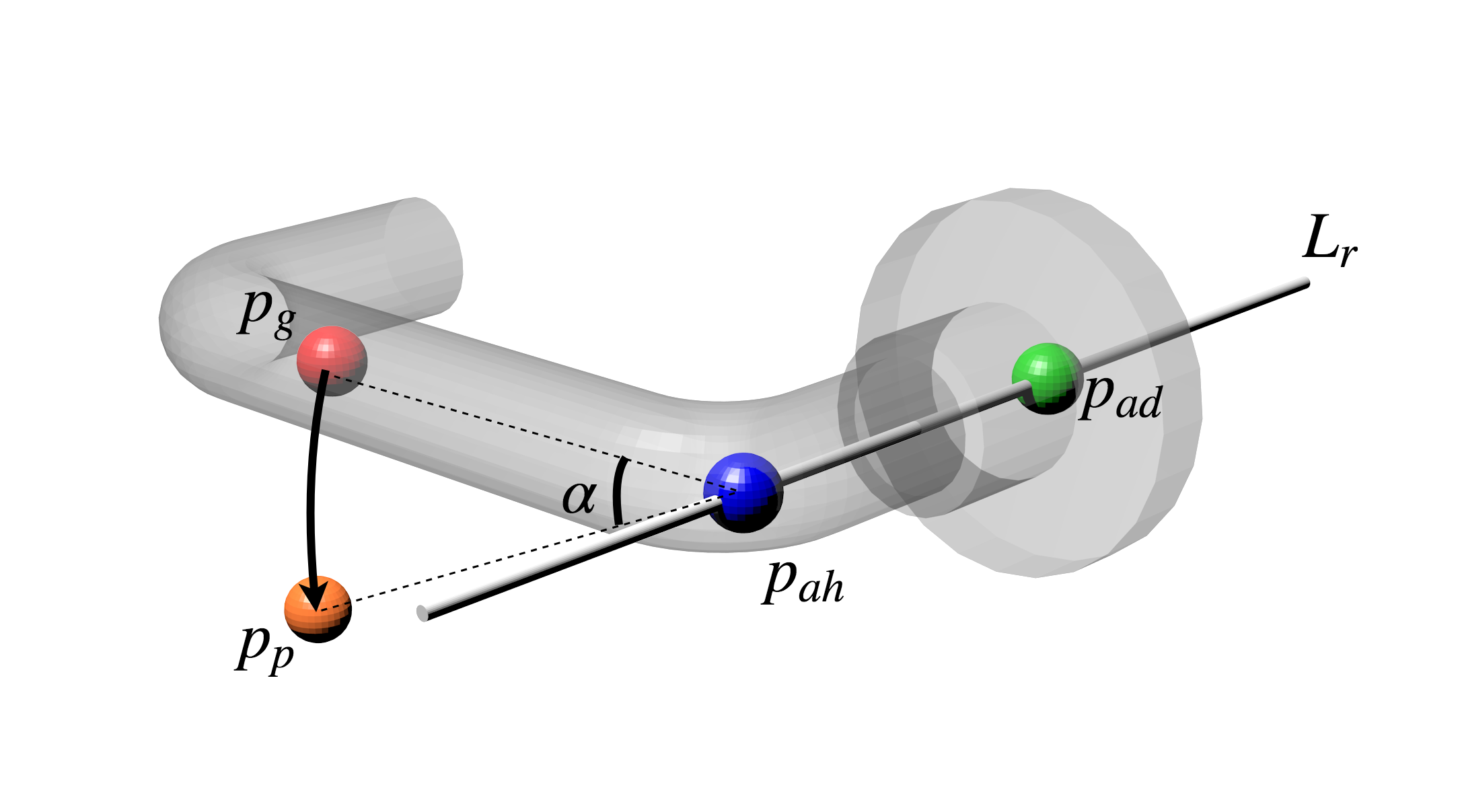
Sina Masnadi, Joseph J. LaViola Jr., Xiaofan Zhu, Karthik Desingh, Odest Chadwicke Jenkins
arXiv preprint arXiv:1911.07340
In this paper, we present an easy to use sketch-based interface to extract geometries and generate affordance files from 3D point clouds for robot-object interaction tasks. Using our system, even novice users can perform robot task planning by employing such sketch tools. Our focus in this paper is employing human-in-the-loop approach to assist in the generation of more accurate affordance templates and guidance of robot through the task execution process. Since we do not employ any unsupervised learning to generate affordance templates, our system performs much faster and is more versatile for template generation. Our system is based on the extraction of geometries for generalized cylindrical and cuboid shapes, after extracting the geometries, affordances are generated for objects by applying simple sketches. We evaluated our technique by asking users to define affordances by employing sketches on the 3D scenes of a door handle and a drawer handle and used the resulting extracted affordance template files to perform the tasks of turning a door handle and opening a drawer by the robot.

Investigating the Value of Privacy within the Internet of Things
Alex Mayle, Neda Hajiakhoond Bidoki, Sina Masnadi, Ladislau Boeloeni, Damla Turgut
GLOBECOM 2017-2017 IEEE Global Communications Conference, 1-6
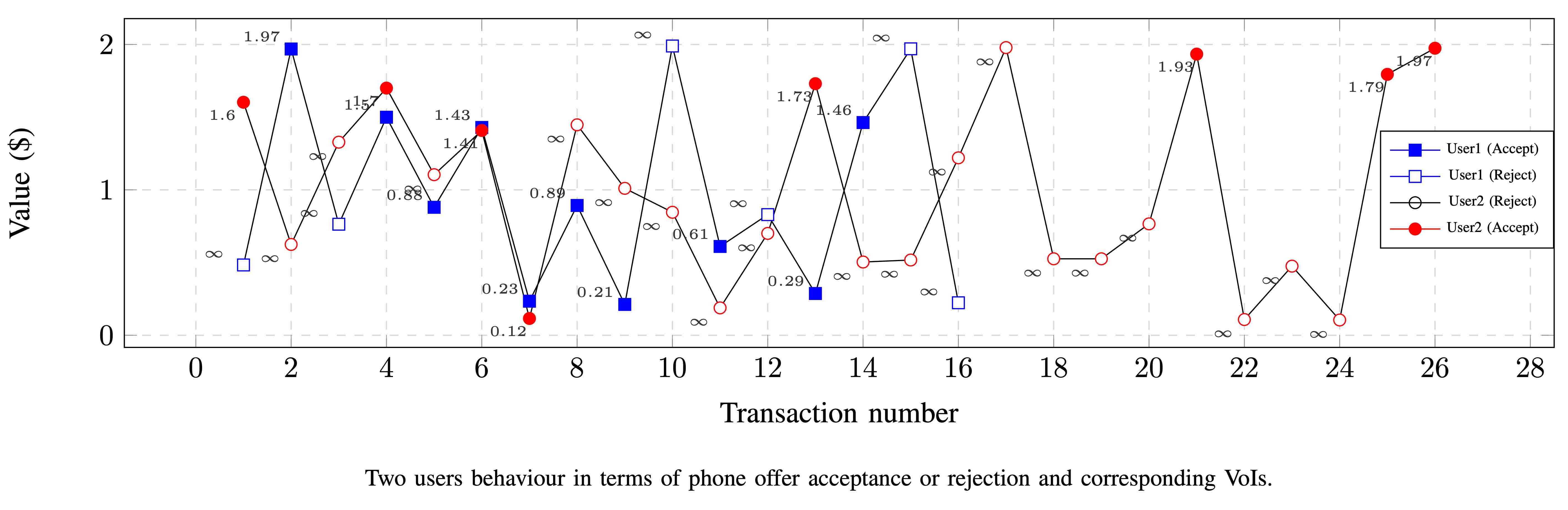
Many companies within the Internet of Things (IoT) sector rely on the personal data of users to deliver and monetize their services, creating a high demand for personal information. A user can be seen as making a series of transactions, each involving the exchange of personal data for a service. In this paper, we argue that privacy can be described quantitatively, using the game- theoretic concept of value of information (VoI), enabling us to assess whether each exchange is an advantageous one for the user. We introduce PrivacyGate, an extension to the Android operating system built for the purpose of studying privacy of IoT transactions. An example study, and its initial results, are provided to illustrate its capabilities.

Education

University of Central Florida

PhD in Computer Science

Research in augmented reality, virtual reality, and human-computer interaction.

Dissertation: Distance Perception Through Head-Mounted Displays.

Worked with Joseph J. LaViola Jr. at UCF.

August 2015 – August 2022

Sharif University of Technology

BSc in Computer Science
August 2010 – May 2015